| Themes |
Explorers
and Adventurers |
Nobel
Prize Winners |
| Actors
and Directors |
Famous
People |
Places
of Interest |
| Anglo-Saxons
and Danes |
Historic
Events |
Prime
Ministers |
| AONB
(National Landscapes) |
Inventors
and Scientists |
Royal
Consorts and Heirs |
|
Artists
and Architects
|
Monarchs |
World
Heritage Sites |
| Composers
and Musicians |
National
Parks |
Writers
and Poets |
|
|
| Film |
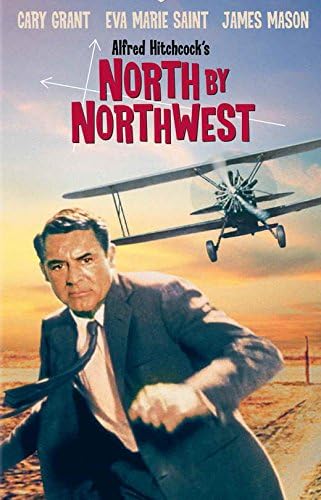
NORTH
BY NORTHWEST
||
Director
Alfred Hitchcock
(1959) |
The
film director Alfred Hitchcock was born as Alfred Joseph
Hitchcock in Leytonstone (then in Essex) in 1899.
He directed his first film in 1926 in the silent film era
but before he moved to Hollywood in 1939 he directed some
of British cinema's best films including The 39 Steps
(1935) and Jamaica Inn (1939).
His US-film debut was Rebecca (1940) which won
an Academy Award for Best Film and he would go on to work
with Hollywood's top stars including on multiple occasions
Cary Grant and James Stewart.
In the space of six years beginning in 1954 he directed a
series of milestone Hollywood thrillers including: Rear
Window (1954), Vertigo (1958), North
by Northwest (1959) and Psycho (1960).
His final film was Family Plot (1976).
|
|
| London
| Waltham Forest |
 The
County of London was formed in 1889 from parts of the ancient counties
of Middlesex, Kent and Surrey, with
the City of London remaining an independent body. I
n 1965 Greater London was formed, taking
in the rest of Middlesex (which no longer existed as a county) together
with parts of Essex and Hertfordshire and further areas of Kent and
Surrey.

Greater
London is made up of 13 Inner and 19 Outer London boroughs together
with the City of London.
Waltham Forest once lay in Essex
and is today one of the 19 boroughs making up Outer London. It lies
on the northeast edge of the capital with the county of Essex to its
north, the River Lea marks its western border and to the east the
London borough of Redbridge.
 London Boroughs |
| Anglo-Saxons
and Danes |
|
Anglo-Saxon Kings
Danish Kings |
The
borough once lay in Essex which once formed the kingdom of the East
Saxons,
later becoming part of the kingdom of Wessex.
The East Saxon kingdom reached from the river Thames in the south
(on the other side of which lay the kingdom of Kent) to the river
Stour in the north (which separated the kingdom from that of the East
Angles).

 |

|
|


 Alfred Hitchcock
 William Morris Society


